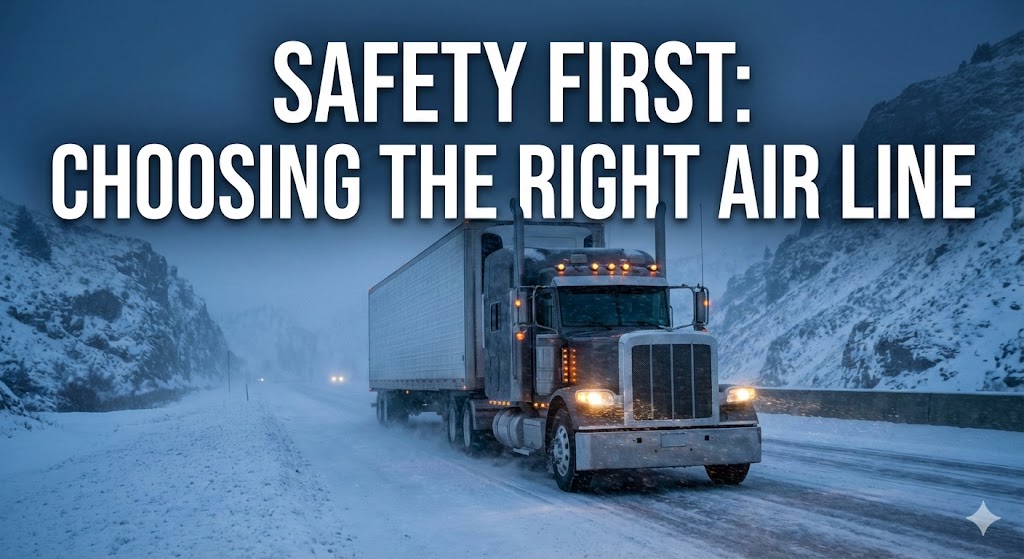
Every winter, fleet managers face the same nightmare: a truck breaks down on the highway because an air brake line snapped in the freezing cold. The cost? Hundreds of dollars in downtime and repairs. The cause? Often, it’s simply choosing the wrong material.
At Aoke Auto Parts, we frequently get asked: “Should I buy the cheaper PU (Polyurethane) coils, or stick with the standard PA12 (Nylon)?”
As a factory manufacturing both, we believe in transparency. In this guide, we’ll break down the technical differences between PA12 and PU, and why PA12 is the only safe choice for heavy-duty braking systems.
1. What is PA12 (Nylon)? The Industry Standard
PA12 (Polyamide 12), commonly known as Nylon, is the “gold standard” material for the commercial trucking industry.
- The “Memory” Effect: PA12 has excellent elastic memory. When you stretch a PA12 Air Brake Coil to its limit, it snaps back to its original compact shape. It doesn’t sag or drag on the deck plate.
- High Pressure: It is engineered to withstand working pressures up to 150 PSI (and burst pressures over 900 PSI), meeting strict SAE J844 and DOT FMVSS 106 regulations.
- Chemical Resistance: It resists diesel, oil, road salts, and UV radiation, ensuring a long lifespan.
2. What is PU (Polyurethane)? The Flexible Alternative
PU (Polyurethane) is a rubber-like material known for its extreme flexibility and softness.
- The Pros: It feels soft to the touch and is very easy to bend. It is often cheaper to produce than PA12.
- The Cons: PU has poor heat resistance and lower burst pressure. Most importantly, it rarely meets DOT standards for air brake systems. It is excellent for pneumatic tools (like air guns in a workshop) but risky for critical braking lines on a moving vehicle.
3. Head-to-Head Comparison: PA12 vs. PU
The difference in quality is most apparent when you look at how the coils hold their shape over time.

The Data Your Fleet Needs:
| Feature | PA12 (Nylon) ✅ | PU (Polyurethane) ⚠️ |
| Best Application | Air Brake Systems (Trucks) | Pneumatic Tools / Workshop Air |
| DOT/SAE Compliance | Yes (SAE J844) | Usually No |
| Working Temperature | -40°C to +100°C | -20°C to +60°C |
| Cold Weather | Remains flexible, won’t crack | Becomes brittle and shatters |
| Pressure Rating | High (Safety Factor 4:1) | Low / Medium |
| Coil Memory | Strong (Snaps back tight) | Weak (Tends to sag over time) |
4. The “Winter Killer”: Why Material Matters
The biggest danger lies in temperature sensitivity.
- PA12 in Winter: Virgin PA12 has a very low glass transition temperature. Even at -40°C (-40°F), it retains its molecular structure, allowing the coil to flex without breaking.
- PU in Winter: When the temperature drops below freezing, PU starts to harden. If a truck turns sharply in sub-zero weather, a frozen PU hose can snap like a dry twig, leading to instant air pressure loss and potential brake lock-up.
Manufacturer’s Tip: Always check the hose printing. If it doesn’t say “DOT” or “SAE J844”, do not use it for your brake system.
5. Why Aoke Chooses Virgin PA12
At Aoke Auto Parts, we refuse to compromise on safety. We use 100% Virgin PA12 raw materials for our air brake coils and 3-in-1 Air Lines.
We don’t mix in recycled scrap material (which is cheaper but weaker). Every batch undergoes rigorous testing in our factory laboratory to ensure compliance.
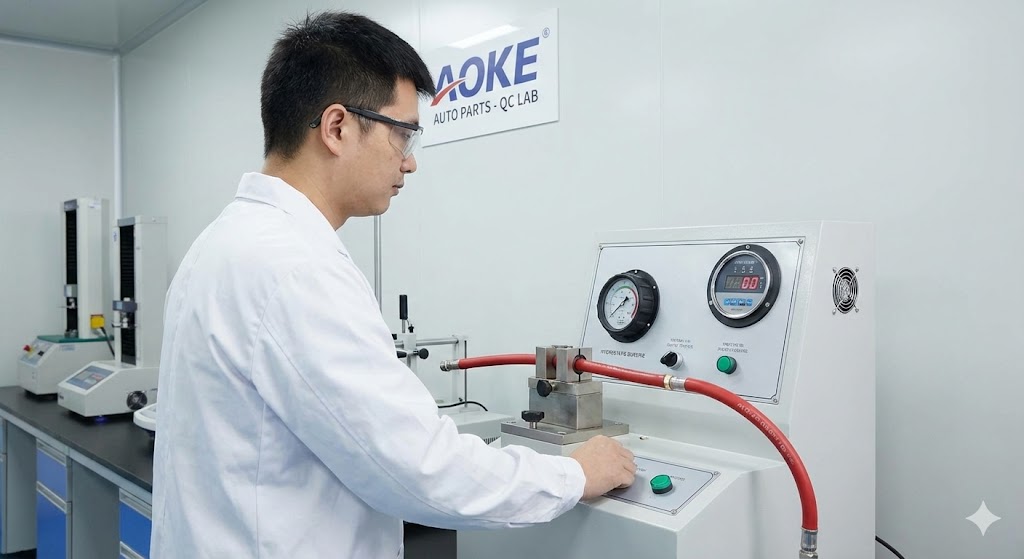
Our quality control process includes:
- Low-Temperature Impact Testing
- Burst Pressure Testing (as seen above)
- 10,000-Cycle Fatigue Testing
Conclusion: While PU hoses might save you a few dollars upfront, the risk of failure on the road makes them the expensive choice in the long run. For safety, compliance, and peace of mind, always specify PA12 Air Brake Tubing.
Looking for DOT-approved PA12 coils direct from the factory? 👉 Request a Quote Today and let our team provide the professional solution your fleet deserves.


